Clean drinking water is something many Canadians assume is guaranteed straight from the tap — but depending on where you live, your water may contain chlorine, sediment, heavy metals, PFAS chemicals, unpleasant tastes, or other contaminants.
Two of the most common filtration technologies are Activated Carbon and Reverse Osmosis (RO) systems. While both can improve water quality, they work very differently and are designed to address different concerns.
So which one is right for your home?
Understanding Activated Carbon Filtration
Activated carbon filters are among the most widely used water filtration technologies in the world. They are commonly found in:
- Refrigerator filters
- Faucet filters
- Pitchers
- Whole-home systems
- Under-sink filtration systems
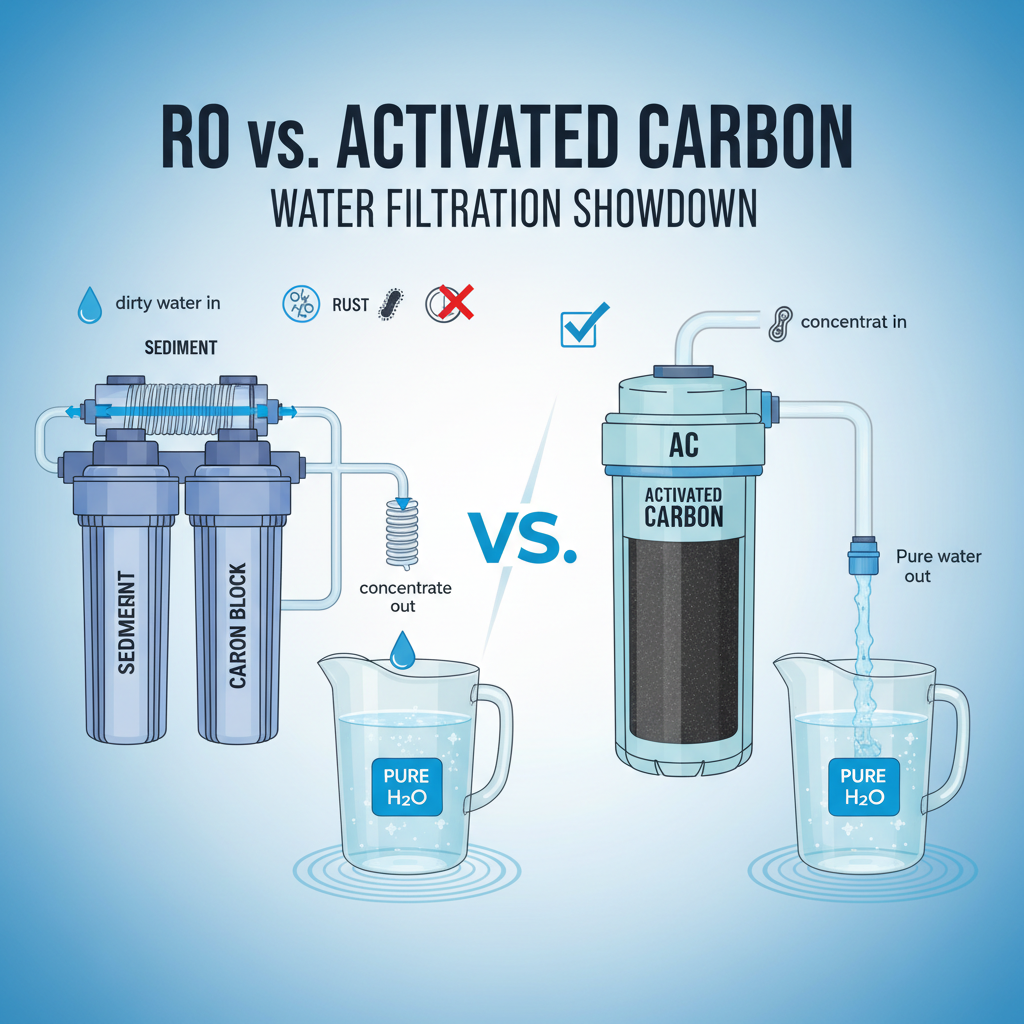
These filters work through a process called adsorption, where contaminants stick to the surface of porous carbon material.
What Activated Carbon Filters Can Reduce
- Chlorine taste and odour
- Volatile Organic Compounds (VOCs)
- Certain pesticides and herbicides
- Sediment
- Some industrial chemicals
- Unpleasant tastes and smells
Advantages of Activated Carbon Filters
1. Better Taste & Odour
Carbon filtration is excellent at removing chlorine and chemical tastes from municipal water supplies.
2. Lower Cost
Activated carbon systems are generally more affordable than advanced multi-stage filtration systems.
3. Minimal Water Waste
Unlike some advanced filtration methods, carbon filters typically do not waste water during operation.
4. Simpler Maintenance
Most carbon filters only require periodic cartridge replacement.
Limitations of Activated Carbon
While activated carbon is useful, it does have limitations.
Carbon filters may not effectively remove:
- Dissolved salts
- Fluoride
- Nitrates
- Many heavy metals
- Certain bacteria or viruses
- Some PFAS compounds
- Total dissolved solids (TDS)
What Is Reverse Osmosis?
Reverse Osmosis, also known as RO, is a more advanced water purification process that uses pressure to force water through a semi-permeable membrane.
The membrane is designed to block extremely small contaminants while allowing purified water molecules to pass through.
What Reverse Osmosis Can Reduce
- Lead
- Fluoride
- PFAS chemicals
- Arsenic
- Nitrates
- Heavy metals
- Chlorine
- Sediment
- Microplastics
- Dissolved solids
- Certain bacteria and contaminants
Advantages of Reverse Osmosis
1. High-Level Purification
RO systems can reduce a wider range of contaminants compared to standard carbon filters.
2. Reduction of Dissolved Solids
RO technology is highly effective at lowering Total Dissolved Solids, also known as TDS.
3. Better for Specific Water Concerns
Households concerned about lead, PFAS, fluoride, or high contaminant levels often choose RO systems.
4. Multi-Stage Filtration
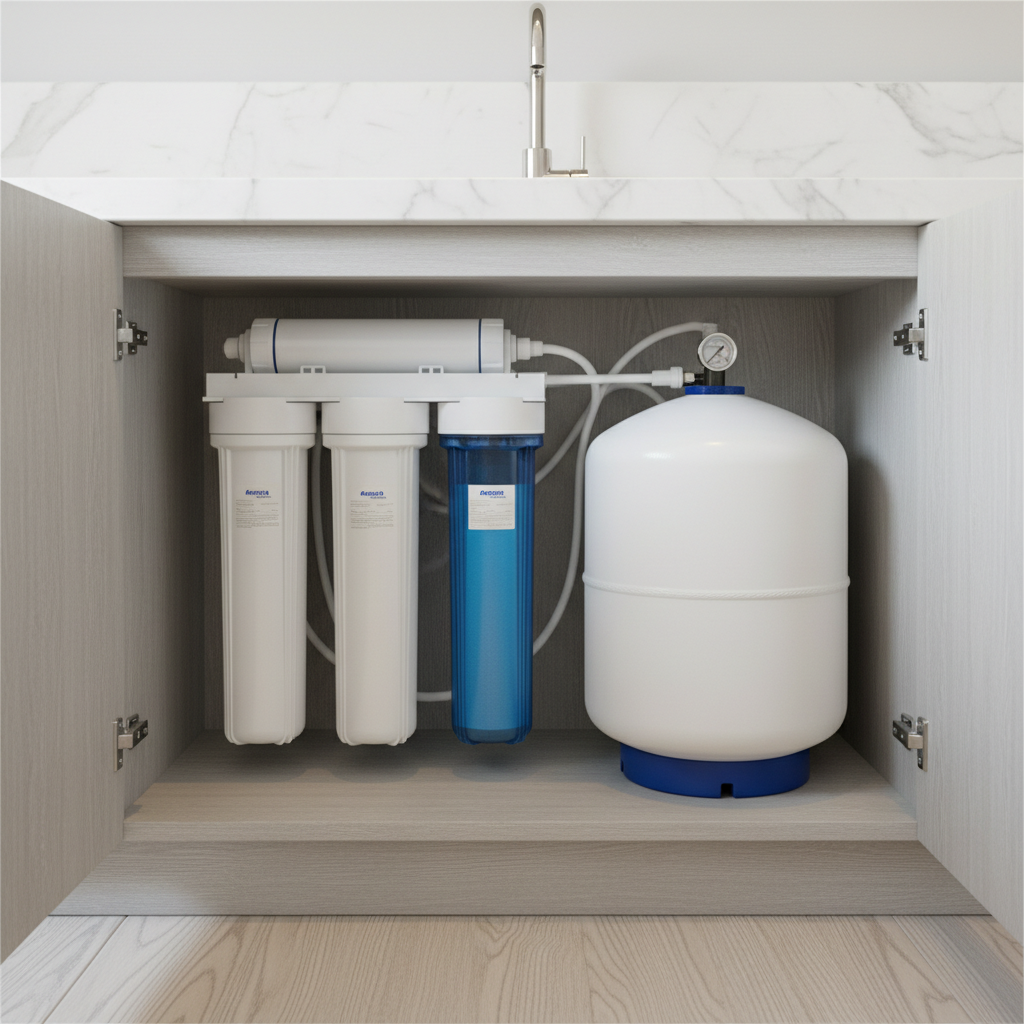
Most modern RO systems also include carbon stages, sediment filtration, and additional polishing filters.
Limitations of Reverse Osmosis
1. Water Waste
Some RO systems produce wastewater during filtration.
2. Slower Filtration
RO systems purify water more slowly than standard carbon filters.
3. More Maintenance
- Multiple filter changes
- Membrane replacement
- Ongoing system maintenance
4. Mineral Removal
RO systems can remove beneficial minerals alongside contaminants, which is why some systems include remineralization stages.
Which Filter Is Better?
The answer depends on your water quality concerns and goals.
Activated Carbon May Be Best If:
- You mainly want better tasting water
- You want to reduce chlorine and odours
- Your municipal water already meets high safety standards
- You prefer a lower-cost filtration option
- You want minimal maintenance
Reverse Osmosis May Be Best If:
- You want broader contaminant reduction
- You are concerned about PFAS, fluoride, or heavy metals
- Your water has high TDS levels
- You use well water
- You want a more advanced purification system
Can You Use Both?
Yes — and many systems already do.
Most modern Reverse Osmosis systems include activated carbon filtration stages before and after the RO membrane. This combination helps to:
- Improve taste
- Protect the membrane
- Reduce chlorine
- Enhance overall filtration performance
Why Water Testing Matters First
Before choosing a filtration system, it's important to understand what's actually in your water.
Water quality can vary depending on:
- Your municipality
- Building infrastructure
- Plumbing materials
- Well water conditions
- Regional environmental factors
A proper water test can help identify:
- Hardness
- Chlorine levels
- Heavy metals
- Bacteria
- PFAS
- pH imbalance
- Total dissolved solids
Final Thoughts
Both Activated Carbon and Reverse Osmosis systems play important roles in water filtration, but they serve different purposes.
Activated carbon is excellent for improving taste, reducing chlorine, and offering simple everyday filtration. Reverse Osmosis provides more advanced purification and broader contaminant reduction for households seeking higher-level treatment.
Understanding your water is the first step toward making informed decisions about what you and your family drink every day.
Educational Content Notice
This article is provided for general educational purposes only. The Canadian Institute for Water Quality Education does not endorse specific commercial products or services. Always consult a certified water professional for advice specific to your situation.