Canada's Water Consumption Challenge
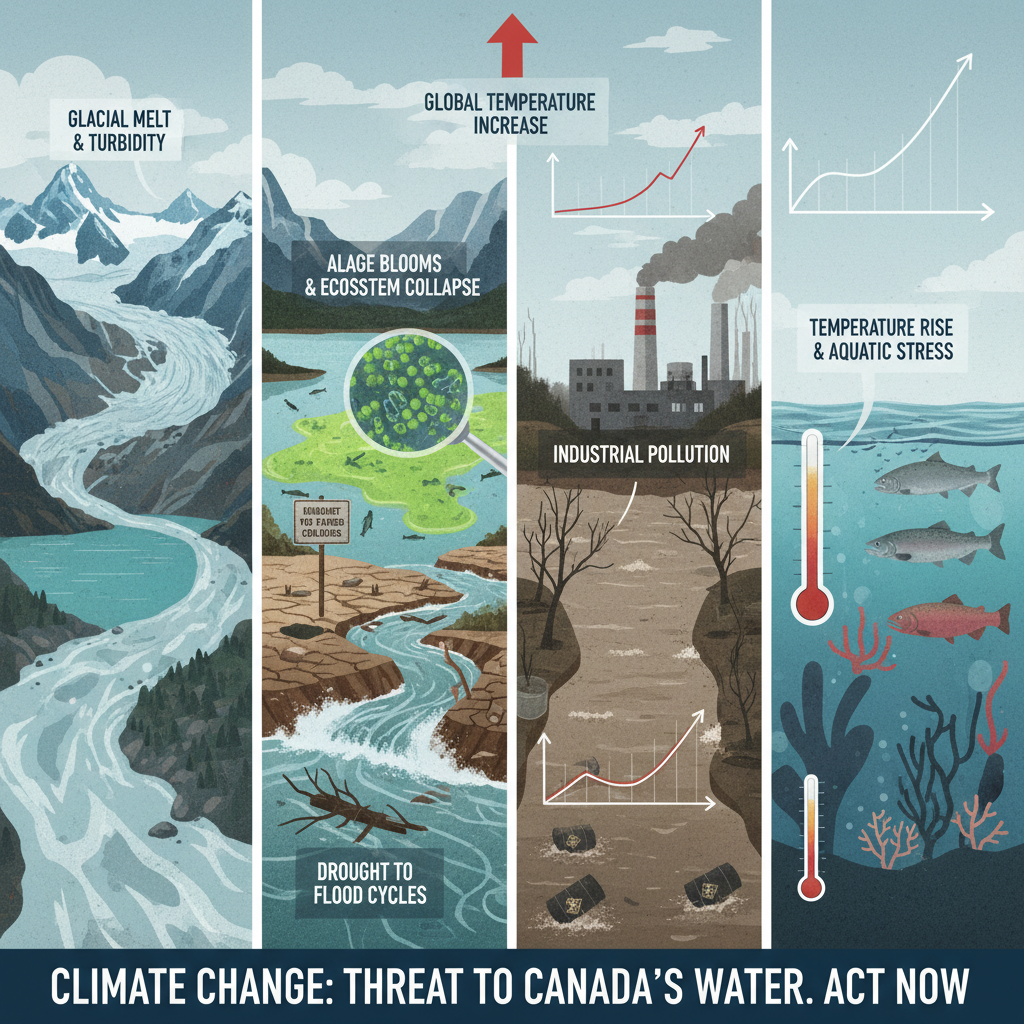
Canadians are among the world's highest per-capita water consumers, using an average of 329 litres per day — nearly three times the European average. With climate change reducing water availability in many regions and aging infrastructure under strain, conservation is increasingly important.
Where Does Household Water Go?
| Use | Approximate Share | |---|---| | Toilet flushing | 30% | | Showers and baths | 35% | | Laundry | 15% | | Faucets (kitchen/bathroom) | 12% | | Dishwashers | 3% | | Other | 5% |
High-Impact Conservation Measures
Bathroom
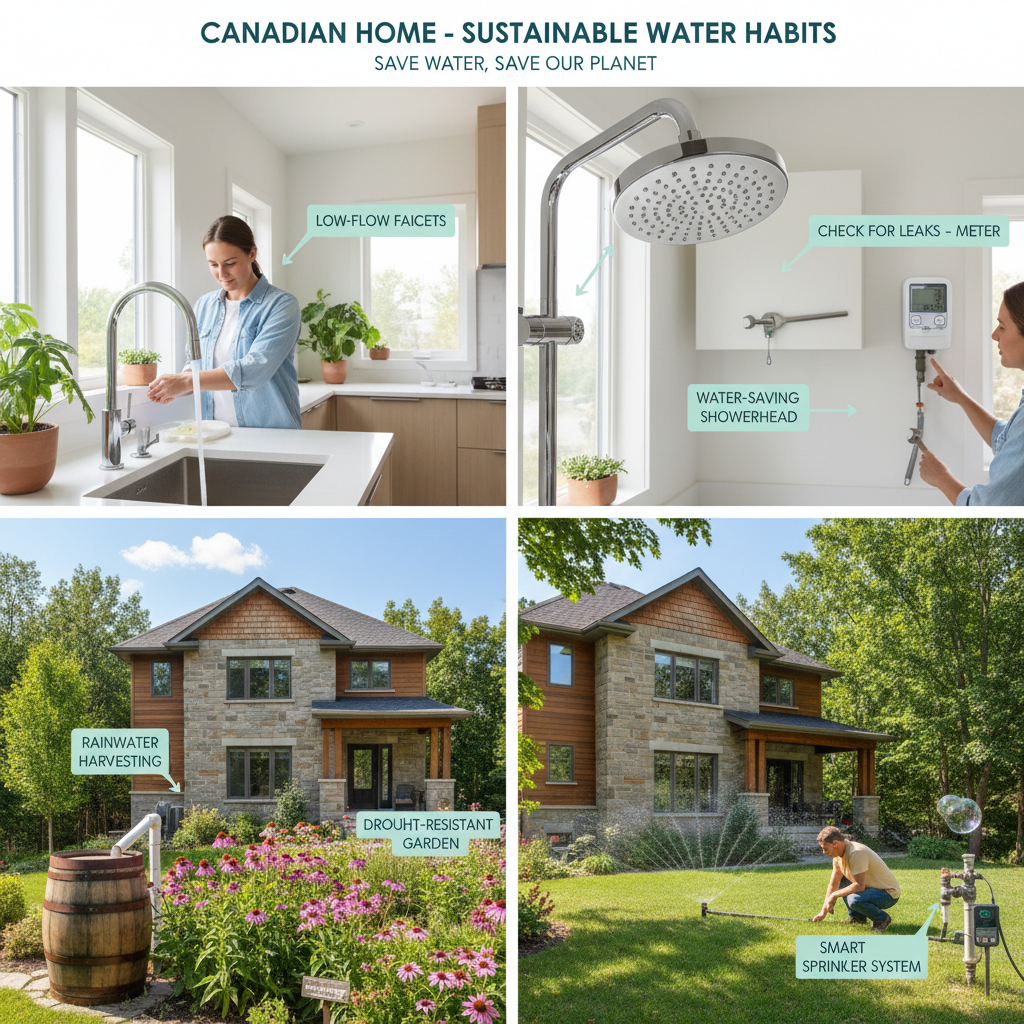
- Install a low-flow showerhead (< 7.6 L/min): saves up to 15,000 L/year per person
- Replace toilets with dual-flush or WaterSense models: standard toilets use 13–19 L/flush; modern models use 3–6 L
- Fix leaky faucets: A drip every second wastes 11,000 litres per year
Kitchen
- Run dishwashers only when full: uses less water than hand washing when operated efficiently
- Thaw food in the refrigerator, not under running water
- Reuse cooking water for plants after cooling
Laundry
- Wash full loads only
- Cold water washing saves energy and is equally effective for most loads
Outdoor
- Water lawns in early morning to minimize evaporation
- Install rain barrels for garden irrigation
- Choose native and drought-resistant plants for landscaping
- A garden hose uses 20+ litres per minute — limit use and install a trigger nozzle
The Financial Incentive
Most Canadian municipalities charge for water consumption. Reducing use by 20% can save $100–$300 per year on water/sewer bills. Many utilities offer rebates for WaterSense-certified fixtures.
Educational Content Notice
This article is provided for general educational purposes only. The Canadian Institute for Water Quality Education does not endorse specific commercial products or services. Always consult a certified water professional for advice specific to your situation.